
FOLD SAFETY
How we comprehensively test the safety of FOLD.
Updated October 2026
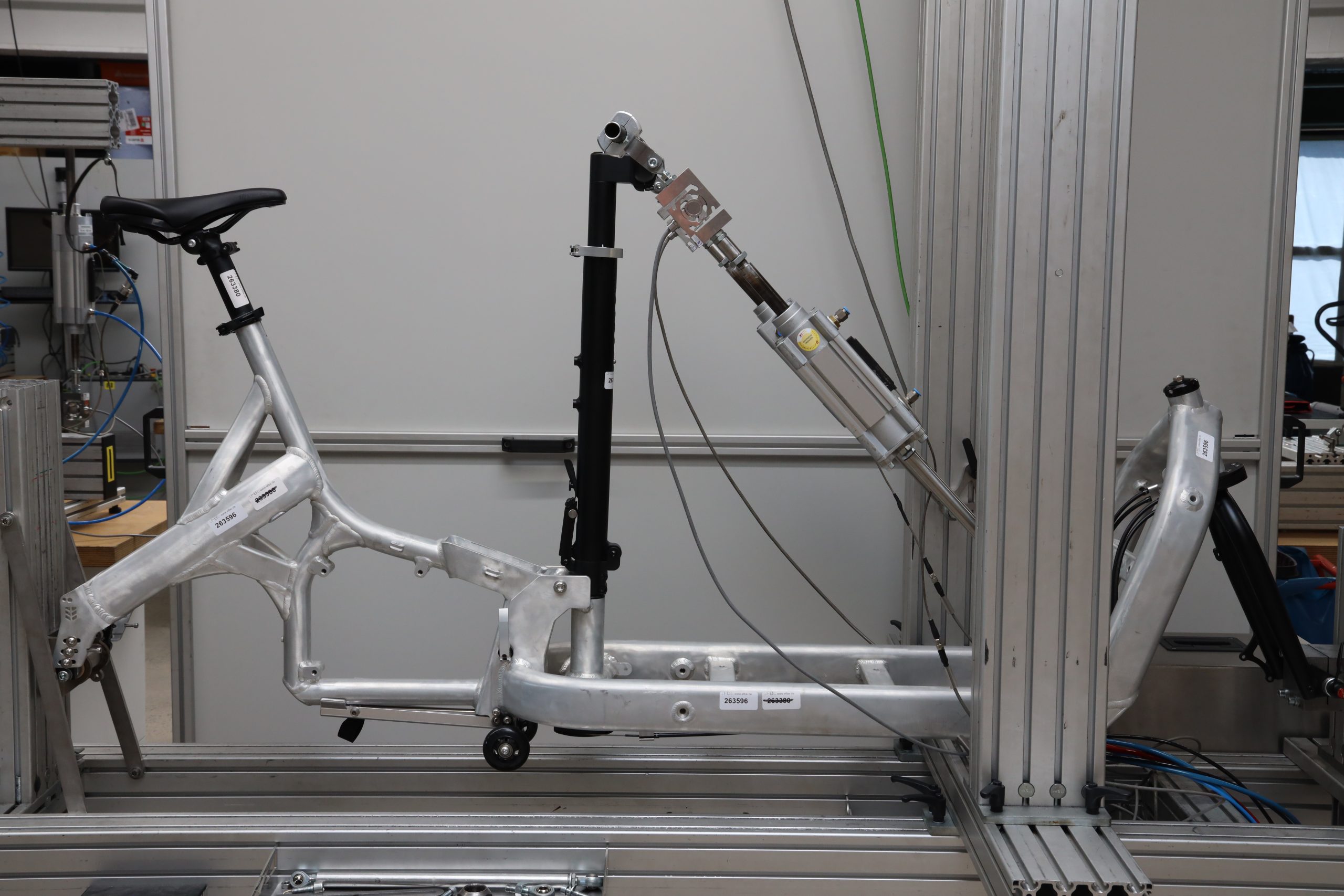
Whether you are transporting your children or riding every day, your safety comes first. That is why we test safety-relevant components of the FOLD cargo bike under realistic and repeated loads.
OUR TESTING APPROACH
Safety is not assumed. It is tested.
For us, safety does not come from a single test. It starts with engineering and continues through prototypes, laboratory testing and technical optimization to the inspection of assembled production bikes.
Permitted total weight
Years of development and testing
Load cycles in the laboratory
tested
By EFBE Prüftechnik GmbH
TEST STANDARDS AND COMPONENTS
Tested for load capacity, function and durability.
Original test basis for horizontal load cases
Independent laboratory testing
Fork testing to the current standard
Load and durability testing
Fatigue, braking and impact testing
Multi-stage load and bending testing
Steering test completed
FROM IDEA TO PRODUCTION
Safety is part of the entire development process.
Every safety-relevant assembly is assessed during engineering, tested as a prototype under defined loads and checked again before series production.
Engineering
Load paths, connection points and safety-relevant components are taken into account from the engineering stage.
Prototypes
New components are first produced as functional samples and prototypes and tested in practice.
Laboratory testing
Frame, fork, stem, folding mechanism and steering are tested for load capacity and durability.
Optimization
Findings from testing feed directly into wall thicknesses, geometries, connections and production details.
Production inspection
Before delivery, assembly, locking, steering, brakes and other safety-relevant functions are inspected.
INDEPENDENT LABORATORY TESTING
Testing under defined loads.
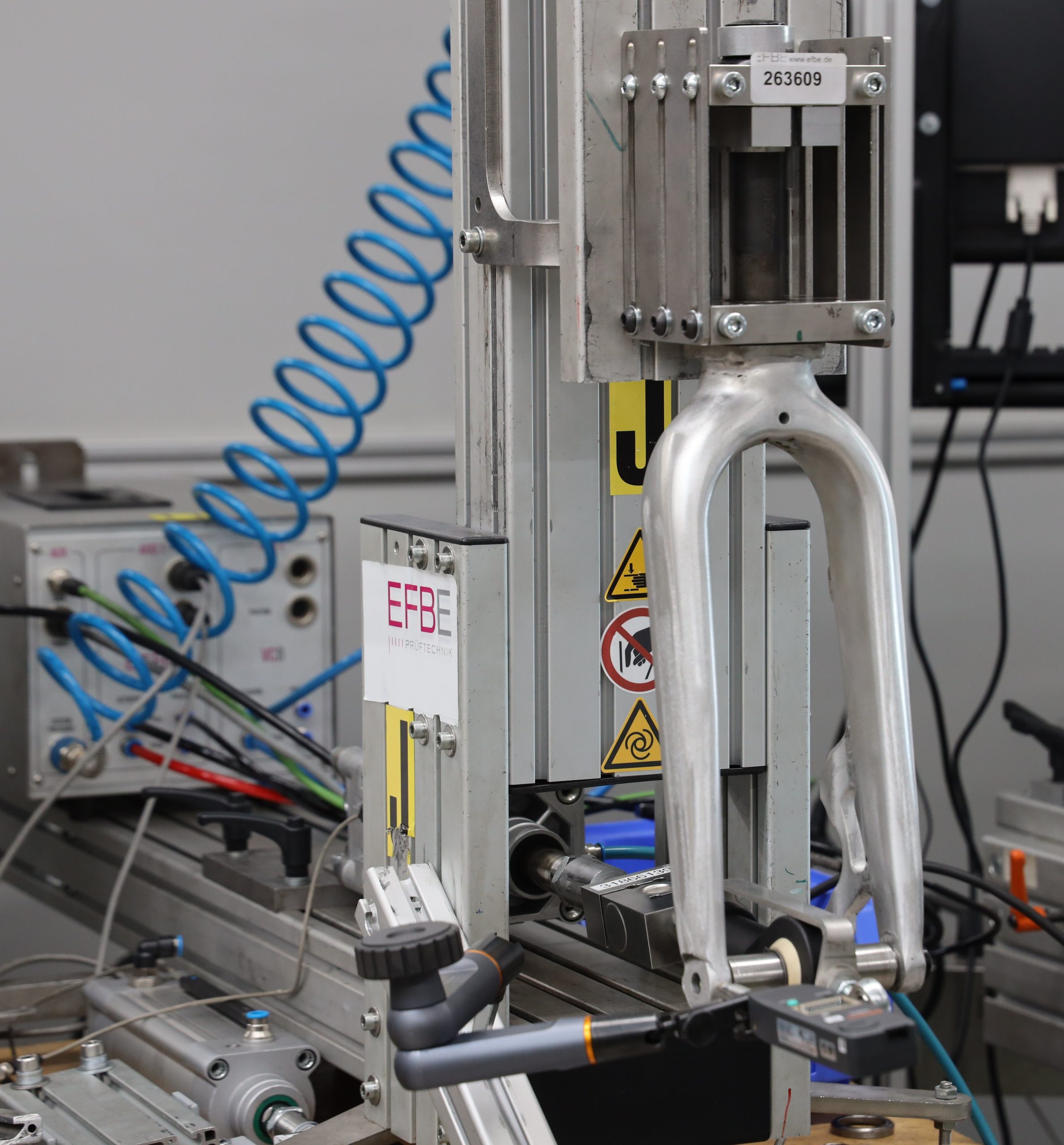
FORK TEST
The fork as a safety-relevant component.
The FOLD fork was examined in an independent testing laboratory under various load scenarios.
- Fatigue test
- Static bending test
- Brake torque test
- Backward impact
- Torsion test
These tests are intended to evaluate the behavior of the fork under sustained loads and identify safety-relevant weaknesses during development.
TEST OVERVIEW
Which properties are specifically examined.
Frame loading
Simulation of repeated forces from riding, payload and uneven road surfaces.
Fork testing
Fatigue, bending, brake torque, impact and torsion testing.
Stem testing
Multi-stage load and bending testing of the adjustable stem unit.
Cable steering
Testing of steering function and reliable long-term force transmission.
Folding mechanism
Inspection of the locking system and protection against unintended opening.
OUR STANDARD
A cargo bike you can rely on every day.
Safety comes from a continuous combination of engineering, independent testing, targeted optimization and careful assembly. This is the principle behind the development and production of FOLD.
SAFETY & PRODUCT INFORMATION
Download PDF